
The tiger is often described as an apex predator, a phrase that conjures images of dominance and teeth. It is accurate, but incomplete. A tiger does not merely sit at the top of a food chain like a crowned monarch. It functions more like a systems manager, quietly regulating traffic below. Remove the tiger, and the forest does not simply lose a species. It begins to lose its grammar.
Ecologists call this phenomenon a trophic cascade. Journalists might call it cause and effect with a long memory. In India’s forests, the tiger is a keystone species, meaning its influence on the ecosystem is disproportionately large compared to its numbers. There are never many tigers. There are only enough. And that sufficiency is what keeps forests standing.
The tiger’s most obvious role is predation. It hunts large herbivores such as sambar, chital, wild pig and occasionally gaur. But the real ecological work happens before a kill is made. Tigers shape behaviour. Herbivores know where tigers live, where they pass, where they pause. This knowledge alters grazing patterns across the forest. Deer avoid open grasslands near tiger corridors. They spend less time stripping saplings in vulnerable areas. They move more. The forest breathes easier.
Without this pressure, herbivore populations do not merely increase. They linger. Overgrazing becomes localized and intense. Young trees fail to regenerate. Understory plants disappear. Soil compaction increases. Streams silt up. Forests thin from the bottom, an ecological hollowing that can take decades to reverse. In this sense, a tiger protects trees it never touches.
This dynamic has been studied across multiple tiger landscapes in India. In reserves where tiger populations have collapsed due to poaching or habitat loss, scientists have recorded changes in vegetation structure, prey behavior and even bird diversity. The absence of fear is not freedom. It is imbalance.
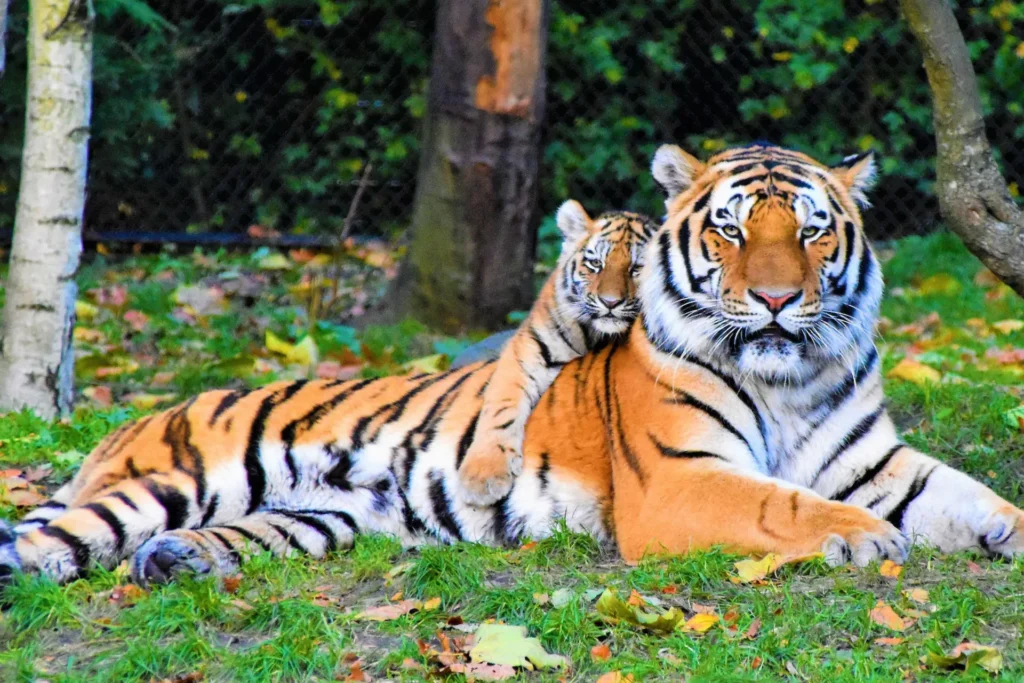
Tigers also enforce spatial discipline among other predators. Leopards, wild dogs and smaller carnivores adjust their territories and hunting times in response to tiger presence. This prevents any single mesopredator from becoming ecologically dominant. The result is a more evenly distributed predation pressure across species and habitats. Balance, not hierarchy, is the outcome.
There is also a less discussed role the tiger plays as a protector of space. Tigers require large territories. A single male may range across hundreds of square kilometers. To conserve tigers is to conserve scale. Protected tiger landscapes in India have inadvertently become refuges for entire ecosystems because you cannot protect a tiger in fragments. You must protect forests whole.
This is why tiger reserves often emerge as biodiversity strongholds. They shelter not only mammals, but birds, reptiles, amphibians, insects, fungi and plant communities that benefit from intact habitat. A tiger’s need for space becomes a forest’s right to exist.
The tiger’s influence extends into water systems as well. By regulating herbivore movement near streams and riverbanks, tigers indirectly protect riparian vegetation. This vegetation stabilizes banks, reduces erosion and improves water quality. In landscapes like central India, where seasonal rivers dictate life cycles, this quiet protection has cascading benefits for fish, amphibians and human communities downstream.
Then there is the human dimension, which complicates but does not diminish the tiger’s role. In India, forests that hold tigers often receive stronger legal protection, better funding and higher conservation scrutiny. This is not because trees lack charisma, but because tigers attract attention. They become ambassadors for landscapes that would otherwise be easier to log, mine or fragment.
Critics sometimes call this “charismatic megafauna conservation,” as though charisma were a vice. In practice, it has saved millions of hectares of forest. When a tiger thrives, patrols increase, corridors are protected, and land-use decisions are contested with greater seriousness. The tiger becomes a negotiating force in policy rooms far from the forest.
Of course, tigers are not benevolent planners. They are not trying to save forests. They are trying to survive. But evolution has placed them in a position where their survival aligns with ecological health. This alignment is rare and precious.
A forest without tigers can persist, but it behaves differently. It grows quieter, less complex, more vulnerable to collapse under stress. Climate variability, invasive species and human pressure take greater tolls when the regulating force at the top is missing.
To say that a tiger creates a forest is not poetic exaggeration. It is ecological shorthand. The tiger creates conditions under which forests can regenerate, diversify and stabilize. It protects forests not by guarding them, but by making them function as systems rather than collections of trees.
In the end, the tiger’s greatest act of creation may be restraint. By limiting excess, by inducing movement, by commanding space without overusing it, the tiger teaches the forest how to hold itself together. And in doing so, it reminds us that power in nature is rarely loud. It is structural.